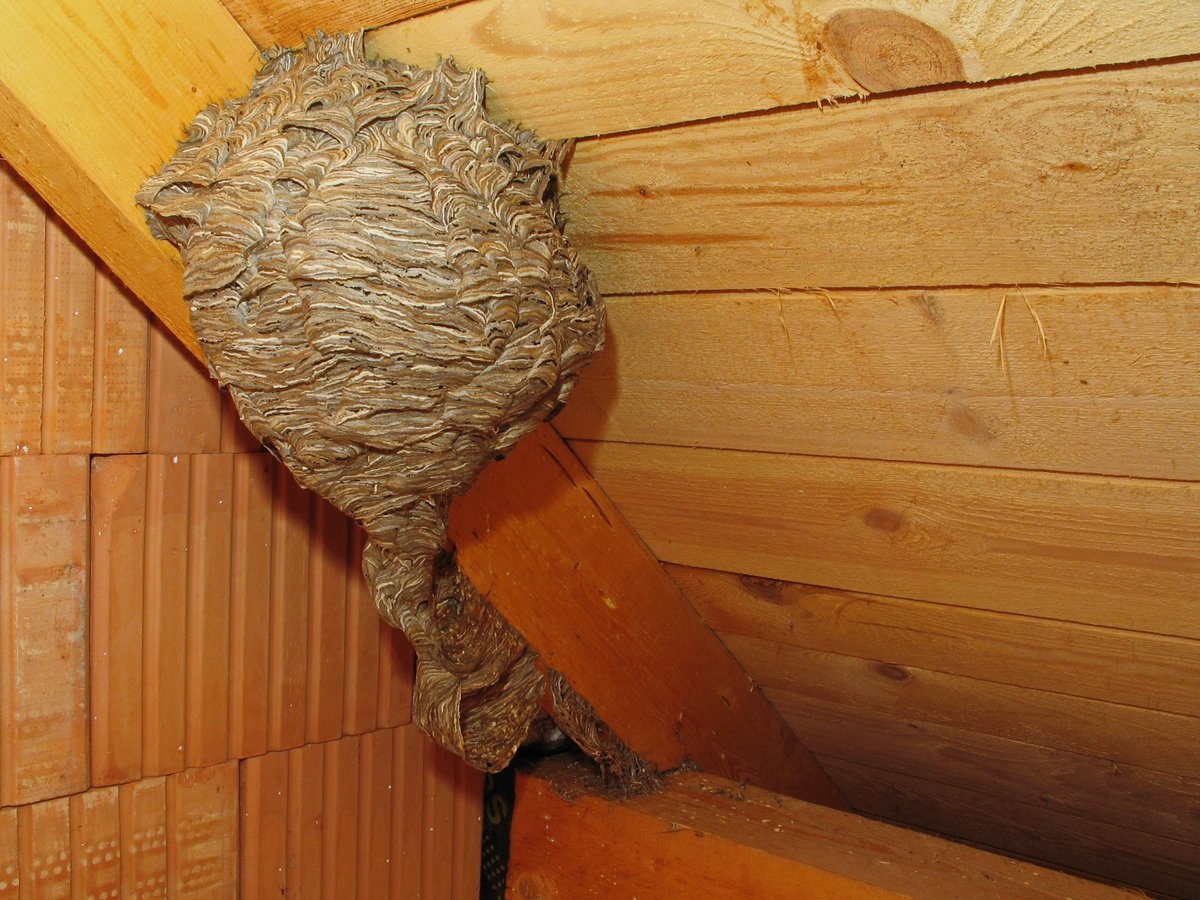
Where nests are found
Wasps like a sheltered spot: under an eaves, in a cavity wall, in a roller-shutter box or behind a facade panel. Nests also turn up in a shed or garage that is rarely used.
Some species nest low to the ground, in a bush or in a hole in the ground. That needs a very different assessment from a nest high up on a facade.
The location determines how hard the nest is to reach. That usually matters more than the size of the nest itself.
When does a nest cause problems?
Problems mainly arise when the nest is close to a walking route. Think of a door that opens and closes often, a terrace where people eat, or a window that stays open for long periods in summer.
If the nest is in a remote spot where hardly anyone goes, the nuisance is often limited. In that case the nest can sometimes be left until the season is over.
If it gets busy around the nest, or people with an allergy are nearby, that counts in the decision.
Identifying the species is the first step
Wasps, bees and hornets look alike from a distance, but each needs a different approach. Bees are protected and are not treated just like that.
That is why it is unwise to decide what to do from a quick glimpse. First establish which species it is, then decide.
Describe on the phone what you see: the size, the colour, where they fly to and how busy it is. That often already gives a good first impression.
What you should not do
Do not treat a nest yourself with a product from the shop. Wasps react aggressively when the nest is disturbed, and a nest high up or in a cavity wall cannot be reached safely without the right protection.
Nor should you open a nest to see how big it is. That only increases the risk of stings.
Do not simply block a flight opening. Wasps will look for another way out, sometimes into the house.
What you can do
Keep your distance from the immediate area around the nest and warn the people you live with. Keep children and pets away.
Limit sweet smells and food near the nest, such as open soft drinks or fruit on a terrace.
If the nest is somewhere people pass every day, call us and discuss the situation. Then it becomes clear what is possible.