Why you rarely see them
Mice are prey animals by nature. They avoid open spaces and prefer to move along walls, behind furniture and through hollow spaces. They are mainly active when the house is quiet: late in the evening and at night.
That behaviour explains why many people only notice something once the trouble has been going on for a while. You do not hear or see the animal itself, but the consequences of its presence.
Droppings and gnaw marks
The most reliable sign is droppings. They are small, dark and often pointed. You find them along skirting boards, behind cupboards, under the kitchen counter and in or near a pantry.
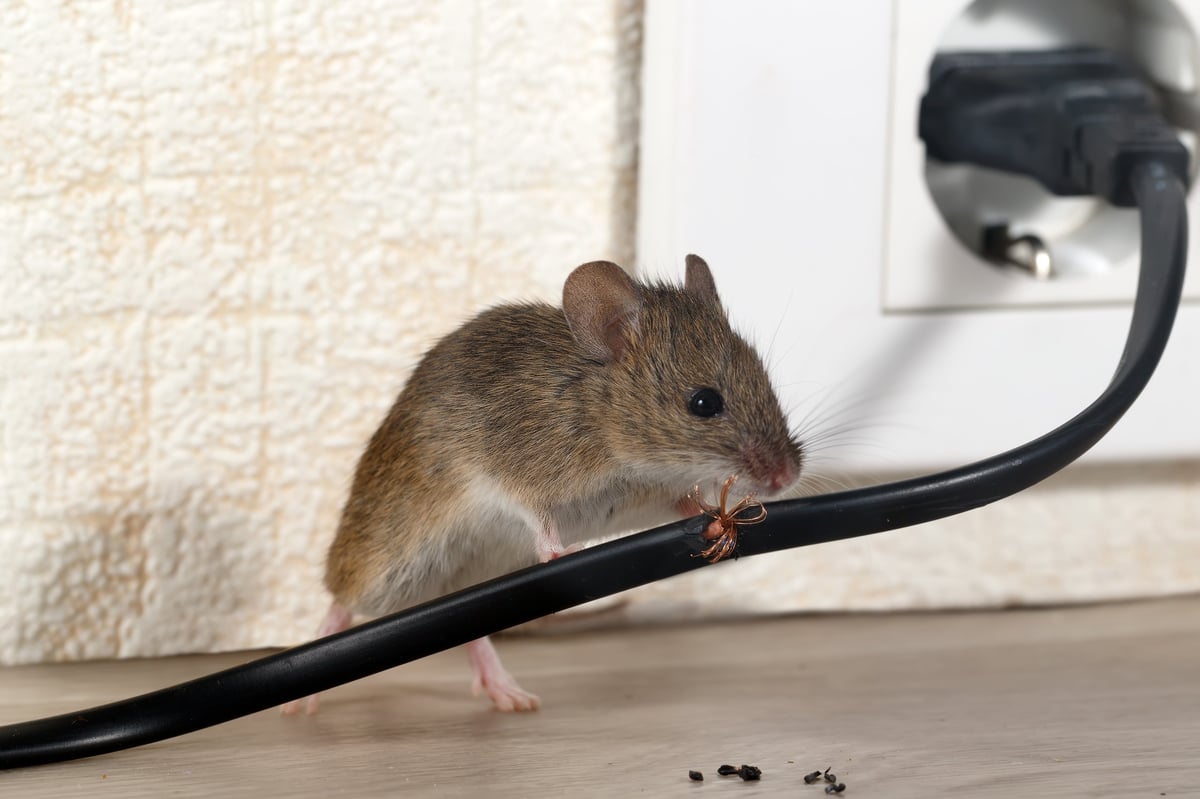
You will also often see gnaw marks. Mice gnaw at food packaging, but also at cables, wooden skirting boards and sometimes pipes. Watch for tears in plastic bags and small heaps of spilled food.
Grease marks along a wall can also say something. Because mice keep using the same route, a dark trail can appear along a wall or skirting board.
Noises in the house
Scratching or rustling in the evening is a classic sign. The sound often seems to come from the ceiling, a wall or behind a kitchen cupboard.
Telling it apart from other sounds is not always easy. Knocking or ticking noises in pipes have a different cause. Describe as precisely as possible where and when you hear it — that helps the assessment.
Possible entry points
Mice need very little space to get in. Openings around pipes, cables and ventilation are well-known spots, as are gaps under a door or around a window frame.
Mice can also come in through a crawl space or a shed attached directly to the house. Often it is not one clear opening but several small ones.
There is little point in sealing all openings yourself without knowing where the animals are. First establish where they are, then take measures.
What to note down for an inspection
Note where you see the signs: which room, at what height and along which wall. Write down when you started noticing it and whether it is getting worse.
Also tell us whether there are children or pets in the house and whether you have already tried anything yourself. Those are exactly the details that make a difference in a phone call or an inspection.
When to get in touch
Do you see droppings or gnaw marks, or have you heard noises for several days? Then it is advisable to get in touch. Mice multiply quickly and the trouble rarely decreases on its own.
Not sure whether it really is mice? Describe on the phone what you have noticed. You can call even without being sure; together we will decide on the right next step.