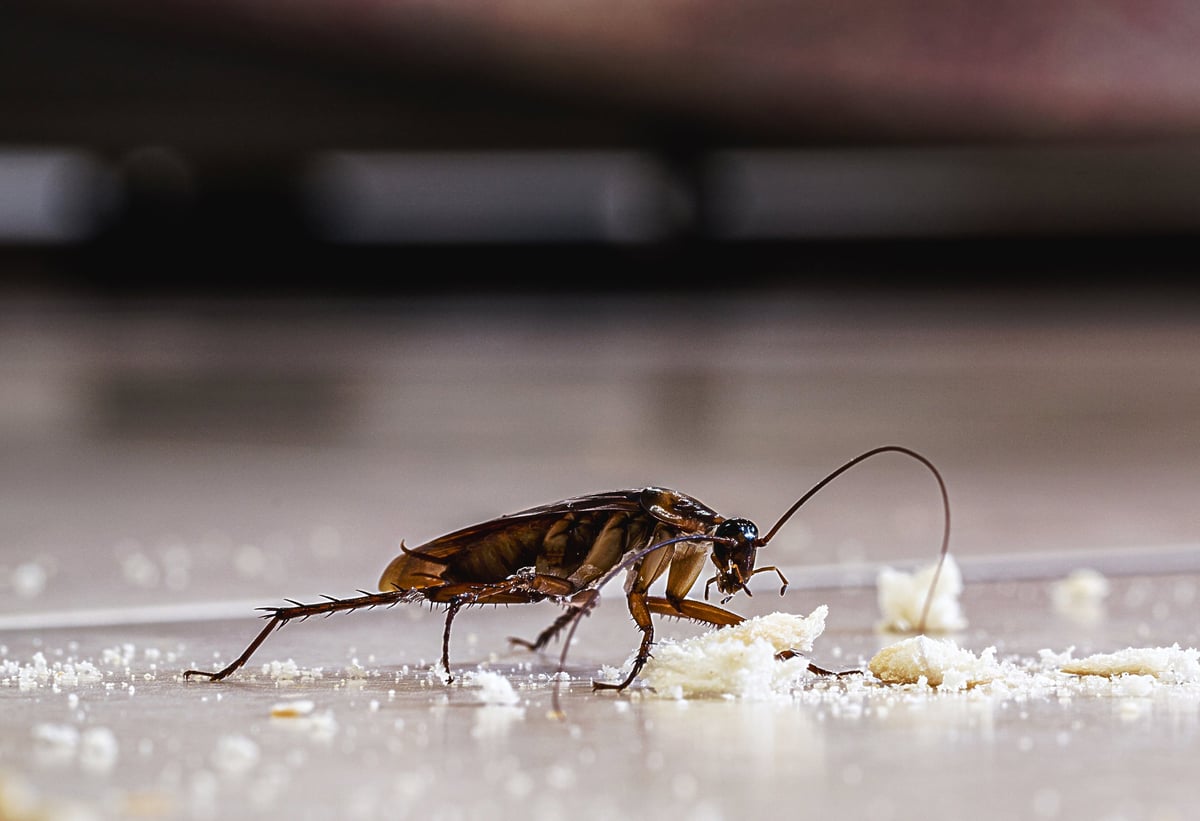
How to recognise them
Cockroaches have a flat, oval body and long antennae. They are brown to dark brown in colour and scurry away quickly when light appears.
You rarely see them during the day. Usually you notice them because something darts away in a dark corner when you switch on the light at night.
Young ones are smaller and look less like the adults. That makes recognition harder at first.
Signs you can find
Small dark droppings that look like ground pepper or coffee grounds are a clue. You find them in cracks, behind skirting boards and under appliances.
Shed skins also occur. Cockroaches moult several times in their lives, leaving empty casings behind.
Egg capsules — small brown cases — are sometimes found in a gap or corner behind a cupboard.
Where to find them
The kitchen is a classic spot: warmth, food and moisture come together there. Think of cracks behind kitchen cabinets and the space behind and under appliances.
The bathroom and toilet, pipe shafts, the crawl space and a waste room are also well-known places.
In a business premises food, packaging and pipe shafts often play a role together. In hospitality and shops that needs extra attention.
Without judgement
Cockroaches say nothing about how clean a house is. They are drawn to warmth and moisture and can get in through pipes, packaging or furniture.
That is an important point, because many people feel uncomfortable about it. When assessing the situation we look at what is needed, not at how it got this far.
Why an inspection first matters
Cockroaches hide in places you rarely see yourself. Without knowing where they are, a treatment is not targeted and the trouble keeps coming back.
An inspection maps out which rooms are involved and where the hiding places are. On that basis we decide which approach fits and whether follow-up is needed.
So do not start with shop-bought products without that picture. That can make things quieter for a while, but it does not solve the cause.
When to get in touch
Do you see a cockroach regularly, or find signs in several places? Then it is advisable to get in touch before the situation spreads further.
Describe on the phone what you have seen and where. We will then discuss the right next step — even if you are not yet sure which insect it is.